
















The Docket

  • MONDAY:

    The Scribbler

    James Lincoln Warren

  • MONDAY:

    Spirit of the Law

    Janice Law

  • TUESDAY:

    High-Heeled Gumshoe

    Melodie Johnson Howe

  • WEDNESDAY:

    Tune It Or Die!

    Robert Lopresti

  • THURSDAY:

    Femme Fatale

    Deborah
    Elliott-Upton

  • FRIDAY:

    Bander- snatches

    Steven Steinbock

  • SATURDAY:

    Mississippi Mud

    John M. Floyd

  • SATURDAY:

    New York Minute

    Angela Zeman

  • SUNDAY:

    The A.D.D. Detective

    Leigh Lundin

  • AD HOC:

    Mystery Masterclass

    Distinguished Guest Contributors

  • AD HOC:

    Surprise Witness

    Guest Blogger

  • Aural Argument

    "The Sack 'Em Up Men"

    "Crow's Avenue"

    "The Stain"

    "Jumpin' Jack Flash"

    "The Art of the Short Story"

    "Bouchercon 2010 Short Story Panel"

Monday, September 5: Spirit of the Law

GOODNESS

by Janice Law

The late Jean Kerr entitled one of her books of essays The Snake Has All the Lines, and, boy, was she right. I think anyone who writes fiction, and not just mystery writers, would agree that while evil is easy—or as easy as anything ever is in fiction—goodness is hard. Evil can be over the top, evil can be exciting, evil writes nicely.

This can be disconcerting. Of all the characters I’ve had to construct dialogue for, the one that wrote the easiest was the Abbé LeSage, an historical character important in the Affair of the Poisons at the court of Louis XIV.

The Abbé, a defrocked priest, was a child molester, a purveyor of poisons and a celebrant of Black Masses; in short, a thoroughly nasty piece of work, and yet he was waiting for me every morning when I sat down at the computer. You don’t have to be a Calvinist to sense Original Sin behind this rapport.

So it is both reassuring and philosophically pleasing to find a genuinely good character in fiction who is neither sentimental nor saccharine. Since I’ve long had such a character in mind without ever managing to fit her to a novel, I confess to being a bit envious of Alexander McCall Smith’s wonderful Mma Precious Ramotswe of the Ladies Number One Detective Agency of Botswana.

Smith is clearly a genial man as well as a writer with a great fertility of imagination, populating not only the Gaborone of the Number One Detective Agency, but creating the denizens of 44 Scotland Street and the intellectual crowd in the Isabel Dalhousie novels. And he has other novel lines as well.

But though Bertie and Cyril, the dog, are wonderful in the 44 Scotland Street series, no one compares to Precious Ramotswe. Isabel Dalhousie edits a journal of ethical inquiry, but Mma Ramotswe lives to a genuinely high ethical standard and shows a marvelous sympathy and tolerance for her friends, her neighbors, her family, and her clients.

The series has a formula. In each novel, the agency handles two or three cases, sometimes quite serious, sometimes minor, interwoven with the ordinary strains of life and the troubles of the stock company, comprised of Mr. J. B. L. Matekonie, proprietor of Tlokweng Road Speedy Motors and, at long last, the good husband of Mma Ramotswe; Grace Makutsi, her prickly and energetic assistant, recipient of 98% in the never to be forgotten secretarial exam; the two orphans Mma Ramotswe adopted, and the domineering matron of the orphan home with her endless mechanical troubles.

We know that we will hear encomiums to Mma Ramotswe’s father and to Botswana’s founding president, witness the drinking of many cups of bush tea, and be privy to memories of the tiny white van, which some of us (see reference to Original Sin above) were cheered to see go to the car chop.

But these are no more than to be expected in a long and successful series. Precious Ramotswe is interesting and appealing, because she takes the smaller pains and troubles of life seriously. Because she is courteous, because she is anxious to treat people with kindness and consideration, because she has real empathy with people without losing a strong sense of right and wrong. She sets the bar high, and we’re interested to see how she negotiates it.

Many of our favorite detectives flatter us with their weaknesses. They’re smart, all right, and enduring, but they have bad habits. They drink, they smoke, they mouth off inopportunely, and they have a habit of opening basement doors, literally and metaphorically, when they’d be better to call the police. We think we’d know better and that’s probably why, in general, we listen to the serpent.

Smith, however, has pulled off the neat trick of having an honest, kindly character, whose big vice is that extra pastry on the hotel terrace or another slice of fruit cake at the orphan’s home. Neither the tiny white van nor its replacement would survive a car chase, and she’s more apt to investigate a bad dentist than a serial killer. Even a series of mysterious hospital deaths turns out to be an innocent mistake.

So why do we enjoy her adventures? Because the plots are both humane and ingenious. Because Mma Ramotswe is not just concerned with who done it or why it was done, but on how to make things right as far as possible. She is concerned with preserving the dignity of others and with calling on their best, rather than their worst, impulses. This is goodness, and if she doesn’t have all the lines, she gives the snake a real run for its money.

So congratulations to Alexander McCall Smith on the publication of The Saturday Big Tent Wedding Party, when fans of the series expect that Grace Makutsi will finally marry her furniture store owner, without, we hope, leaving the inimitable Ladies Number One Detective Agency of Botswana.


Posted in Spirit of the Law on September 5th, 2011
4 Comments »

Sunday, September 4: The A.D.D. Detective

FEEDBACK

by Leigh Lundin

Reading

My friend Micheline wrote that Umberto Eco is rewriting his famous book The Name of the Rose to make it more "accessible". The announcement surprised me.

rose

When I think of inaccessible, Thomas Pynchon comes to mind. Mention impenetrable and several Beat Generation authors (when they weren’t killing one another) surface, William S Burroughs, Jack Kerouac, perhaps Allen Ginsberg. Speak of inscrutable, expatriates float to the top, say Aleksandr Solzhenitsyn and T.S. Eliot. Then there are the wreak-havoc-with-my-ADD trilogy authors, Mervyn Peake (Gormenghast Trilogy) and Stephen R. Donaldson (Thomas Covenant, the Unbeliever).

But surely not The Name of the Rose? It’s been a long time since I’ve read it, but apparently it’s true as article after article attests. The only mention of Eco’s rewriting project I’ve found is in Italian, but Google provides a not-so-bad translation. For the moment, I’ll reserve judgment until The Rose version 2.0 comes out.

While Umberto Eco is responding to readers after publication, I’d like to hear from readers before. Read on.

Writing

When I was a little kid, the household roused at five in the morning for bathing and breakfast, for milking, feeding, and boarding the school bus. Part of winter routines was an underscore of the radio featuring the farm report and commodities futures, chats from the eloquent Paul Harvey and Earl Nightingale, and Minute Mysteries, successor of the 1940s’ Five Minute Mysteries. In truth, two of those five minutes comprised organ music, embedded to let a radio engineer dial down the organ while an announcer described the irresistible advantages of their sponsors’ products.

Years later, a girlfriend and I put our feet up and read Donald Sobol’s Two Minute Mysteries, where Dr. Haledjian solves a crime or conundrum in 300 words or less. As much as I enjoyed the challenge, the majority of the stories didn’t prove wonderfully satisfying, but they were the best game in town.

Sobol’s stories are the most popular of this sub-genre where several writers have dabbled in one, two, three, four, five, six, ten, twelve, and twenty minute mysteries. When I discussed these with Dale Andrews, he pointed out Ellery Queen Mystery Magazine once published similar ‘puzzle stories’. I would eventually learn John Floyd specializes in exactly these kinds of stories, snappy 700-word gems feasted upon by millions of readers.

Brief Cases predator

The formats follow a formula: The author sets the scene and the premise, then pauses to allow the reader or listener a chance to answer before the detective presents his solution. Success depends upon careful listening or reading and realizing that if you’re driving eastward, you aren’t likely to be blinded by the late afternoon sun. Occasionally plot devices hinge upon knowledge of trivia such that one kind of plant has thorns and another doesn’t. Often the trick is to catch a character in a lie, after which the radio detective gleefully announces the lie proves guilt with the direst consequences: "Everyone knows you don’t wear brown shoes with a black suit, Mr. Mangle, but we’ll fashion a necktie suitable for hanging."

Liking the puzzle concept better than the stories themselves, I longed to take a stab at ’em. Most minute mystery word counts are remarkably consistent, but I didn’t want stories overly constrained.

My goal was a rounded mystery with characterization, a five to ten minute mystery with flexibility to run long or short as the clues dictated. If a plot could be told in 800 words, fine, but if one ran to 1800 or even 2800, that was okay, too. I debated what to call them, thinking of mini-mysteries, vignette mysteries, and thanks to a suggestion settled upon Brief Cases.

In these early exercises, I developed a detective named Mickey Chadwick, a cop from a family of cops whom we sometimes encounter. I’m not sure the moniker ‘Mickey’ is sealed in stone, but he may be stuck with the name.

We meet him as a detective sergeant, but gunshot injuries force him out of the profession he loves. He returns to school, where he becomes a professor of criminalistics at his university’s Police Institute (loosely based on the SPI at the University of Kentucky) and a crime consultant.

Like the reader, he’s mainly an armchair detective, so he’ll hear the same clues we do. From time to time he may need more research, which hints the reader may wish to google a topic.

Chadwick’s stories strive to avoid obscurities like "Everyone knows a Mojave rattler’s toxins differ from other rattlesnakes." If a plot hinges on arcane facts that only hamster lovers might know, (1) the narrative attempts to lay a foundation for what might seem abstruse and (2) the story also offers readers an alternative way to solve the mystery.

Smelling Like a Rose

Some novelists seek ‘beta readers’– fans who read and critique stories before publication– but I don’t recall any of my CB colleagues seeking such feedback from early readers. Me, I could use the help. I need a trusted voice that says this works and that doesn’t, go with this but not that.

If you’d like to be a voice, your input is welcome. If you’d like to sample a couple of stories, you can comment here on CB (making sure we have your correct eMail address), or drop me a note at

brief.cases (at) mail (dot) com

Thank you!

Posted in The A.D.D. Detective on September 4th, 2011
8 Comments »

Saturday, September 3: Mississippi Mud

A HELPFUL DISCUSSION?

by John M. Floyd

“Fat, dumb, and happy” isn’t a good description of me, but that’s only because I happen to be skinny. The other two adjectives are a good fit — I’m usually content and carefree. My wife is the worrier.

She’s the one who’s always concerned that we’ll make an accidental and innocent mistake on our tax return and spend the rest of our lives in prison, or that she’ll be tracked down and arrested for driving through the tail end of a yellow light, or that the Anti-Terrorist Task Force will get their street addresses wrong and break down our door in the middle of the night. I’m the opposite. I stew a bit when the stock market bobs up and down the way it has lately, but otherwise I’m fairly easygoing. And as far as the long arm of the Law is concerned, I’ve always held the probably naïve belief that if I’m honest and try to do the right thing, nothing’s going to jump out of one of the dark alleys of our legal system and drag me away.

I feel pretty much the same way about the rules and ethics of writing fiction. I don’t plagiarize and I don’t write harmful things about real people or products or corporations, so I don’t worry a lot about the possibility of litigation. But something in the news recently has added a little fuel to my wife’s already overactive imagination.

You’ve probably heard about it. Kathryn Stockett, the lady who wrote the bestselling novel The Help, was sued by a woman who claims that one of the book’s (and the movie’s) main characters was based on her. Stockett denies it, even though the two names are similar, and the question might be moot anyway—I heard the judge dismissed the suit a few days ago because it was filed past the one-year statute of limitations. But the incident does serve to remind us writers that it’s not only the nonfiction guys who run the risk of a lawsuit.

If you’re a fellow writer of short stories or novels, what do you do to make sure you don’t run into legal problems? Personally, I usually Google my characters’ names before I submit a story to try to ensure that I haven’t inadvertently referred to a real and identifiable person, and I sometimes (though not often) go so far as to invent company names and set my stories in fictional locations. Otherwise, I don’t worry about it much. The chances that I would be sued are slim anyhow, since I’m a guppy in a small pond—lawyers want bigger fish to try. I think it’s significant that Ms. Stockett was sued only after her book hit the bestseller lists.

I also think it’s interesting that there seems to be almost as much discussion about the lawsuit as about The Help itself. If it’s really true what they say about there being no such thing as “bad publicity,” the suit and its aftermath were probably a gift straight from heaven. In fact, if I were writing a fictional account of a situation like this, I’d probably have the author character plan the whole thing beforehand. In my story, I’d have the author find someone and say, “Look, I’m writing this book, and if it’s published and does well, you pop up and say I wrote about you without your permission, and sue my pants off, and the controversy will sell even more books and I’ll make a gazillion bucks and I’ll give you such-and-such a percentage.” I’m not saying that’s what happened, because it didn’t, but that’s the way I would plot it.

One final word: The Help is one of the two best novels about the South I’ve read in a long time—the other is Crooked Letter, Crooked Letter, by Tom Franklin—and I think it deserves every bit of success and recognition it’s received. I’ve not yet seen its film adaptation, but I plan to.

Meanwhile, I’ll continue to write, and I’ll continue to try to avoid any contact with lawyers. Maybe if I do get sued, it’ll mean I’ve finally hit the big time.

Posted in Mississippi Mud on September 3rd, 2011
8 Comments »

Friday, September 2: Bandersnatches

CH-CH-CH-CHANGES

by Steven Steinbock

Fall is a times of changes. Regular followers of Criminal Brief know of one major change that was announced in JLW’s column this past Monday.

As many readers know, I spent the summer on the Left Coast. Last week, just hours in advance of Hurricane Irene, I returned to the New England coast. In the process, I encountered a number of changes, not the least of which was adjusting to the three-hour time difference. (Hmmm, I do get in a lot of good reading during those wee hours of the morning.)

Fall, they say, is the best time to be in New England. I’d agree. In fact, I’d go so far as to say that fall is the only time to be in New England. The locals here in Maine refer to our three seasons: fall, winter, and mud. (I’m not trying to be funny. That’s really what they say.) It’s true. In autumn the elms, oaks, and maples transform the landscape as their leaves change to more hues then I ever though existed. Sometime around Thanksgiving, the snow starts to fall, and remains on the ground often until April. Then, as the snow melts and mixes with five months of the sand that they’ve been spreading to reduce accidents, everyone dons hip-boots hoping not to get mired in muck.

The big maple in front of my house hasn’t turned yet. But since coming home, I’ve been struck by some changes. Walking out to get the mail yesterday, I cursed at the damage done to my lilies. The blossoms were already long gone, having bloomed and then faded while I was in Seattle. But the remaining stalks were eaten away with black holes left by the nasty red beetles that come every year to fornicate on my lilies. It isn’t enough that the damn pests eat my lily leaves, but why do they have to do it in pairs, mocking me hump and chomp. Can’ they go somewhere else to mate?

Whew. I’m glad I got that off my chest.

All summer I’d been driving my son’s Subaru Impreza Sport. It’s a cute car. But it’s a teenager’s car. It’s small, it’s loud, and it’s a five-speed. After returning to the East Coast, the first time I got behind the wheel of my own car, I reflexively slammed my left foot to the floor before remembering that my car didn’t have a clutch pedal. On the road, I marvel at the smoothness of the ride, the gentleness of the suspension, and the fact that I can actually hear the music on the stereo. (I do miss my son’s car stereo with all the bells and whistles that I finally learned how to use).

Hurricane Irene came and went with a lot of hoopla, but not a lot of real substance. Coastal Maine was hit by high winds and heavy rain, but we were spared the major flooding and fallen trees that did so much damage elsewhere. I think we lost power for three minutes. My only complaint is that when I went out for coffee, every Starbucks and independent coffee shop in a two-town radius had shut down. (Decaf drinking sissies!)

When the tropical storm was given its name, at first I thought Irene was a weak name for it. But then I thought of the alternatives. “Isabel” by be a good storm name. So might “Imogene.” But what else was there? Hurricane Ivy? Hurricane Ida? Hurricane Ilsa?

Then it struck me that the National Weather Service (or whoever it is that comes up with these weather-pattern names) had given the storm the name of “The Woman” in Sherlock Holmes life. Pretty neat, huh?

Posted in Bandersnatches on September 2nd, 2011
4 Comments »

Thursday, September 1: Femme Fatale

A PERFECT CRIME

by Deborah Elliott-Upton

A detective walks into a practically empty bar and sees a man slumped on the counter. A knife protrudes from his back and blood oozes from the wound. There are two glasses on the bar. One sits in front of the dead man, the other has a lipstick smear on its rim. A burly bartender stands quietly behind the bar wiping a glass.

“You know anything about this?” the detective asks pointing to the dead man.

“Dead guy and his friend were writers. They started drinking and his friend suddenly stood up and pulled out a gun and shot him. Then he left.”

“A gun?” the detective asks. “But what about this knife in his back?”

“He came in with that. Said he’d been backstabbed so many times he couldn’t count them anymore, but the pain was definitely getting worse.”

The detective scratched his head. “So, his death was caused by a bullet. You said the friend who shot him was a man. So, what’s with the lipstick on the glass?”

The bartender shrugged. “I think it was supposed to be symbolic.”

“I don’t get it,” the detective said.

The bartender leaned close and whispered, “They’re literary authors.”

The short mystery story is like a well-told joke. There is a set-up followed by a series of seemingly innocent statements that should clue us into what comes next. But if it’s a good joke, the punch line should never be expected until it’s revealed and then it seems the only possible ending to “the story.”

In a mystery, the setup is usually the crime or a puzzle to solve. The clues follow, but hopefully, are carefully placed so as not to be too obvious. Toss in a few red herrings to throw the sleuth off the trail. The payoff of the detective finding the true criminal is delivered at just the right time for maximum effect. Once the solution is revealed, like a punch line, it’s time to end the routine and the story. The ending of both the joke and the mystery should be satisfying and leaving the audience feeling good.

For the comedian, the audience needs a reason to laugh, applaud and want more. For the writer, his reader also wants satisfaction that his time reading was well-spent so that he’ll want to return to the writer’s next work.

“I don’t know how much longer I can keep my affair with Ron a secret from my husband,”said Britney.

“Is he suspicious?” Barbie asked.

Britney frowned. “I don’t think so. I think he’s from Cleveland.”

“I mean, does he think you aren’t being faithful?”

Britney sighed. “Well, he seemed pretty upset to find Ron in our shower.”

“Your husband caught another man in your shower?”

Britney laughed. “Oh, you silly girl! Ron wasn’t with another man in my shower. It was just me.”

It’s nice when comedy and mystery collide. Characters like Monk, Columbo, and the guys from Psych keep us laughing while they solve mysteries. It takes precision to get it right, but when the writers do, it’s like a perfect crime that just got better.

Posted in Femme Fatale on September 1st, 2011
3 Comments »

Wednesday, August 41: Tune It Or Die!

OF NITS AND THE PICKING THEREOF THERE IS NO END

by Rob Lopresti

I picked up the newspaper today (and yes, I still read the acoustic version, rather than the electric one) and saw something rather odd.

The article was about the investigation of a woman’s disappearance and the police search of a home owned by a “person of interest.” (I just checked. There are at least five mysteries in print with the title A Person Of Interest. Is there any term in law or courts that hasn’t made it onto the cover page of a book?)

Anyway, the newspaper reported that the police had confiscated a personal computer and several paper bags sealed with yellow tape. My fuzzy morning brain immediately pictured the Person of Interest hoarding a closet-full of brown paper bags sealed with tape. Then I realized that what the reporter meant was that the police had confiscated some objects which they sealed into said bags to carry out. (Or so, I assume. Don’t you?)

The critical list

I wish the police all the luck in the world and the Person as much good or bad luck as he deserves, but those paper bags got me thinking about the very human tendency to find little gaffes and point them out to the makers or to the world at large.

(And I would like to report that I finally made it through a paragraph without a parenthesis.)

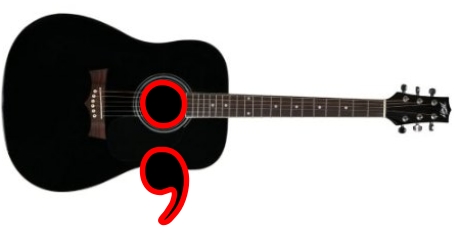
My friend Zeke Hoskin, a frequent commenter here, belongs to the same songwriting group as I and he recently wrote a song about punctuation. When the group started looking at the typed lyrics another member immediately said that he was using a colon where he needed a semicolon. I agreed.

This being a song about punctuation Zeke had checked such things carefully and thought he was right. We started discussing favorite sources for grammar and punctuation rules and I promised to check some the next day at the library.

“We could be wrong, of course,” I told Zeke. “But we aren’t.”

The next day I found that Chicago Manual of Style and Kate Turabian’s Manual both agreed with me. Zeke took it graciously.

Which is more than I did the day my novel was published and a friend took a casual look through and informed me that I had described an event taking place in Brooklyn when it really occurred in Queens. I don’t remember what I said to him, but I am fairly sure “thanks” did not enter into it.

I’m not sure why we human types are so addicted to spotting tiny errors and pointing them out. Helpfulness? Pedagogical streak? Schadenfreude?

Acts of defiance

A few years ago I heard a mystery writer speak and he complained about people who send him corrections. And the worst part, he said, was that they were always wrong.

Well, no, not always. Because I had pointed out to him that in one book he had referred, continuously, to a state senator having an office in D.C. He meant a federal or U.S. senator, of course. State senators would be situated in the state capitol.

Which brings me to another reason for correcting people: obsessive dislike of certain errors. If there’s a twelve step program for that one, sign me up.

Fan mail

A few years ago I received an email from a stranger with the title of my recently published story as the subject line. The text read: “Are you the author?”

I kept my reply equally laconic: “Yup.”

He responded with one sentence that contained a typo that had passed both me and the editors. I think it was salesman where it should have been salesmen.

What I could I do? I thanked him, and in an attempt to get a conversation going, asked which story in the magazine he had liked best. He replied “Yours.”

Which would normally be good for my ego, but I couldn’t help but think that what he had liked was that he had found an error to correct. If so, at least I satisfied one reader.

And by the way, if you are about to correct mistakes in this piece, they are all deliberate. Would I lie?

Posted in Tune It Or Die! on August 31st, 2011
1 Comment »

Tuesday, August 30: High-Heeled Gumshoe

WHAT DO MEN & WOMEN WANT?

by Melodie Johnson Howe

This fall NBC is bringing back The Playboy Club (ergo young sexy Playboy Bunnies) in a new series. Another channel is bringing back the now defunct airline Pan Am (ergo the young, sexy, “come fly with me” stewardesses of the sixties) in a series. What do these two TV shows have in common? Obviously the sixties, a decade long gone. But beyond the time warp there is a yearning or an old dream of how women used to be or imagined to be. Or maybe not.

According Caitlin Flanagan in The Wall Street Journal the opening of The Playboy Club pilot episode has a bunny driving her stiletto heel into a Chicago mafia boss’s temple. Soon she finds a handsome man to help her hide the body and ends up taking a shower at his bachelor pad to rinse the blood off her sexy body. This is where 2011 slams into the sixties. Or Hooters meets Bunnies. Women are still acting tough, except now they do it in a bunny suit and high heels instead of a police uniform or jeans and a tank top.

For those, Dear Readers, who are into facts, or may not know much about the bunny suit, here are few from the Wall Street Journal: The rabbit ears on the Playboy Bunnies were eight inches high. They were much taller, but Hugh Hefner, who didn’t wear his pajamas day and night back then, thought they looked like horns and had them cut down. The bunny tail was a bundle of yarn and adhered to the costume with three hook-and-eye closures. (This was pre-Velcro) The one-piece strapless suit cut high up on the hip was stiffened by five pieces of boning—three in the front and two in the back. The white collar with black bow tie, and the cuffs were added later by Pajama Man to give the outfit “class”.

This brings me back to the opening scene of the pilot. A woman cannot bend from the waist in a bunny outfit. She can’t slouch, she is not pliable. All motion from the torso area is restricted. A Mafia boss could rip her eight-inch ears off before she could turn tail and run. Bunnies could barely serve drinks. The only way they accomplished this task was by bending their knees and pushing out their bunny tails as if they were going to sit down.

For you information, the writer Edith Wharton wrote in bed because that allowed her wear her night gown and avoid the stays of her corset.

The success of Mad Men is one reason for revisiting the era of bunnies, and stewardesses wearing tight, chic, French-designed jackets and skirts. Caitlin Flanagan reminds us of the Southwest airline pilot who was caught on mic “lamenting the undesirability of the airline’s attendants who he described as a bunch of ‘gays and grannies and grandes’.”

The other reason is desperation and a total lack of creative thought. Any thought. Having created women who are ripped and honed and can punch a villain out with her tiny fist—why not put her in a bunny suit? Or make her a sexy airline hostess that we know all men long for? We’ve thought of everything else.

It seems to me that most mystery writers get female characters right. And I think it’s the boundaries of the genre that help. No matter how many guns are fired, knives thrown, and bombs blown up, a mystery must be solved by logic. Logic needs a brain. And that part of the brain is gender free.

As a writer I’m constantly weighing what my female characters should and should not do. I find myself walking that line between reality, sexual politics, and the need for physical action to keep the pace and tension going.

Before Gloria Steinem (who was a Playboy Bunny and made her name writing about her experience ) and Betty Friedan, there were movies with very independent female characters. Yes, they usually got married at the end and sometimes gave up their careers for the privilege. But all the movies of thirties and the forties were in one way or another about strong women who were trying to carve out a life and find love. And unlike today, the female stars carried these movies and led at the box office.

There are generations of women who don’t know about Gloria Steinem and Betty Friedan. They are used to working, they’re trying to find love, and they’re raising a family. One might wonder what a TV show called The Playboy Club would mean to them. They are half of the viewers. Maybe it’s this: the most sought after Halloween costume for women is The Playboy Bunny outfit.

Posted in High-Heeled Gumshoe on August 30th, 2011
9 Comments »
« Previous Page — Next Page »

The Sidebar

  • Lex Artis

      Crippen & Landru
      Futures Mystery   Anthology   Magazine
      Homeville
      The Mystery   Place
      Short Mystery   Fiction Society
      The Strand   Magazine
  • Amicae Curiae

      J.F. Benedetto
      Jan Burke
      Bill Crider
      CrimeSpace
      Dave's Fiction   Warehouse
      Emerald City
      Martin Edwards
      The Gumshoe Site
      Michael Haskins
      _holm
      Killer Hobbies
      Miss Begotten
      Murderati
      Murderous Musings
      Mysterious   Issues
      MWA
      The Rap Sheet
      Sandra Seamans
      Sweet Home   Alameda
      Women of   Mystery
      Louis Willis
  • Filed Briefs

    • Bandersnatches (226)
    • De Novo Review (10)
    • Femme Fatale (224)
    • From the Gallery (3)
    • High-Heeled Gumshoe (151)
    • Miscellany (2)
    • Mississippi Mud (192)
    • Mystery Masterclass (91)
    • New York Minute (21)
    • Spirit of the Law (18)
    • Surprise Witness (46)
    • The A.D.D. Detective (228)
    • The Scribbler (204)
    • Tune It Or Die! (224)
  • Legal Archives

    • September 2011
    • August 2011
    • July 2011
    • June 2011
    • May 2011
    • April 2011
    • March 2011
    • February 2011
    • January 2011
    • December 2010
    • November 2010
    • October 2010
    • September 2010
    • August 2010
    • July 2010
    • June 2010
    • May 2010
    • April 2010
    • March 2010
    • February 2010
    • January 2010
    • December 2009
    • November 2009
    • October 2009
    • September 2009
    • August 2009
    • July 2009
    • June 2009
    • May 2009
    • April 2009
    • March 2009
    • February 2009
    • January 2009
    • December 2008
    • November 2008
    • October 2008
    • September 2008
    • August 2008
    • July 2008
    • June 2008
    • May 2008
    • April 2008
    • March 2008
    • February 2008
    • January 2008
    • December 2007
    • November 2007
    • October 2007
    • September 2007
    • August 2007
    • July 2007
    • June 2007
    • May 2007
Criminal Brief: The Mystery Short Story Web Log Project - Copyright 2011 by the respective authors. All rights reserved.
Opinions expressed are solely those of the author expressing them, and do not reflect the positions of CriminalBrief.com.